
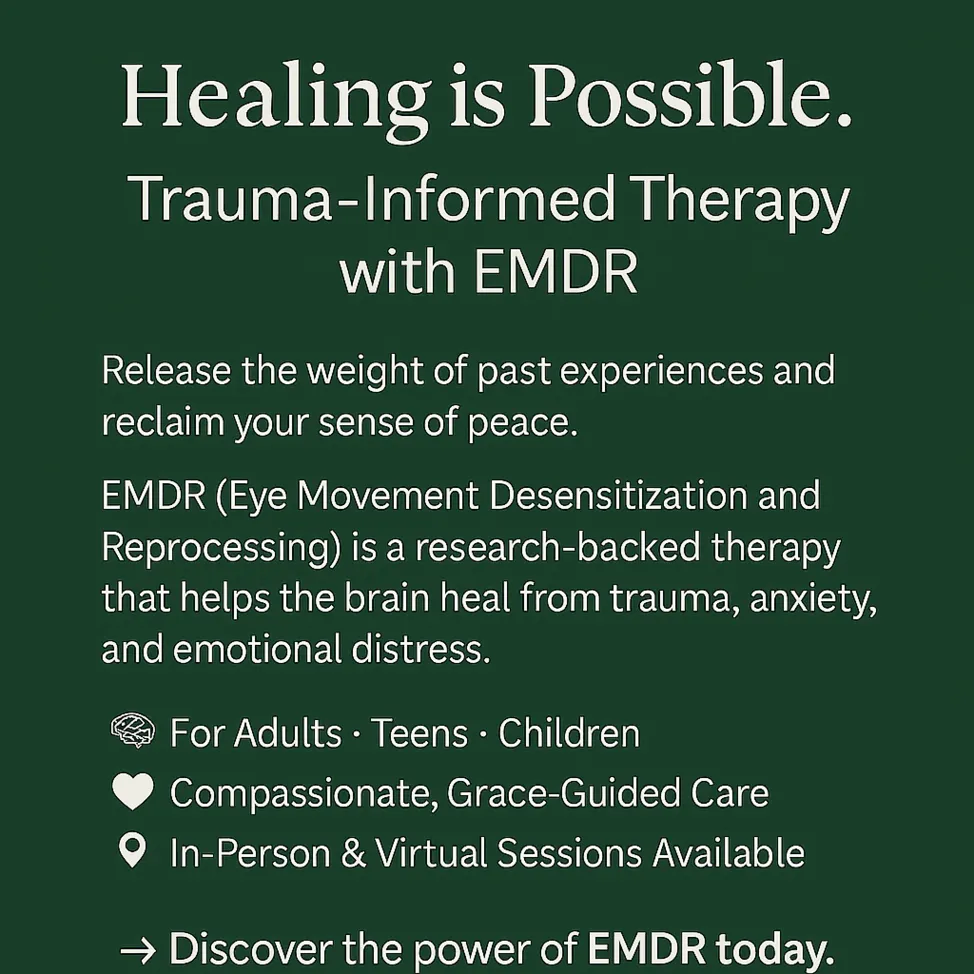
🔍 What is EMDR?
EMDR is an evidence-based psychotherapy developed by Francine Shapiro in the late 1980s. It is primarily used to treat trauma and PTSD, but is also effective with anxiety, depression, grief, phobias, and more. It uses bilateral stimulation (e.g., eye movements, tapping) to help process and integrate distressing memories.
📊 Key Statistics on Effectiveness
| Study / Source | Outcome |
|---|---|
| American Psychological Association (APA) | Recognizes EMDR as an effective treatment for PTSD. |
| World Health Organization (WHO, 2013) | Lists EMDR as one of the only psychotherapies recommended for children, adolescents, and adults with PTSD. |
| Van der Kolk et al. (2007) | EMDR was as effective as prolonged exposure therapy, with lower dropout rates. |
| Maxfield & Hyer (2002) (Meta-analysis) | Found EMDR to be more effective than no treatment or placebo, and comparable to CBT. |
| Chen et al. (2015) (Meta-analysis of 26 RCTs) | Showed large effect size in reducing PTSD symptoms: Cohen’s d ≈ 1.01. |
| National Center for PTSD (VA, 2023) | EMDR can lead to symptom improvement in as few as 6–12 sessions for many clients. |